You turned on the tap this morning and it ran cold. No hot water, no warning, and now you are staring at the tank in the basement wondering whether this is a cheap fix or a $2,000 morning. Before you call a plumber or start pricing new units, you need to know one thing: a water heater with no hot water is one of the most misdiagnosed home repairs there is, and the cause ranges from a free reset button to a part that says buy a new tank. Guess wrong and you either overpay a pro for something you could have cleared in ten minutes, or you scrap a good heater over a $20 part.
The whole tank works off a simple chain. Something heats the water, and something tells it when to run. When either link breaks, the faucet looks the same: cold water. The trick is figuring out which link failed, and the price swing between them is enormous. Here is how to read the symptoms and what each fix costs in 2026.
First, is it gas or electric?
This is the fork that decides everything, because the two types fail in completely different places.
An electric water heater has no flame. It uses two heating elements, an upper and a lower, each with its own thermostat, plus a reset button on a high-limit switch. When you lose hot water, one of those four parts is almost always the culprit.
A gas water heater burns a flame under the tank, lit by a pilot or an igniter. Its usual failure points are the pilot light, the thermocouple that proves the pilot is lit, and the gas control valve that runs the whole show. If the pilot is out and will not stay lit, you are on the gas side of this guide.
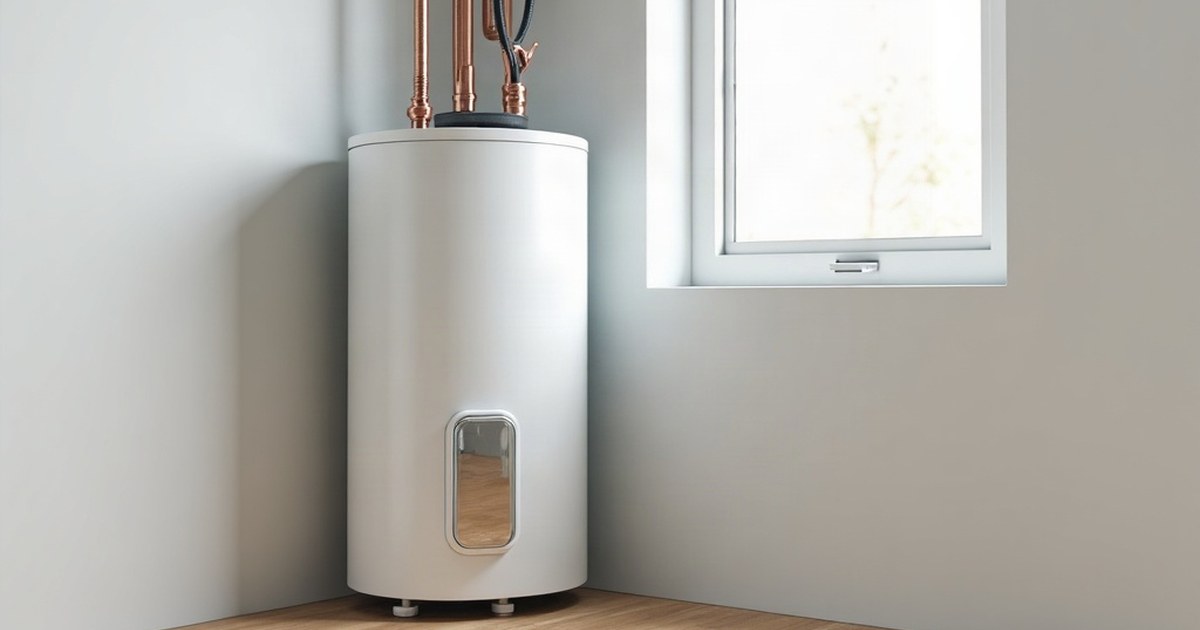
Look at the top of the unit. A thick metal flue pipe and a small window near the bottom means gas. Only electrical conduit and no flue means electric. That one check tells you which cost table applies.
Electric water heater: no hot water repair cost (2026)
These are installed prices for a professional, part plus labor. Most plumbers charge a $75 to $150 service or diagnostic fee, and labor runs $50 to $150 an hour depending on where you live. The same job costs more in Seattle than in Kansas City.
- Tripped reset (high-limit) button: $0 to $150. There is a red button on the upper thermostat behind the top access panel. If it popped, press it once. If that restores hot water and it never trips again, you paid nothing. If it keeps tripping, a thermostat or element is shorting and needs replacing, so do not just keep resetting it.
- Heating element: $200 to $350 installed. A burned-out element is the single most common no-hot-water fault on an electric tank. The part itself is only $15 to $40. If the upper element fails you get no hot water at all; if the lower fails you get a little hot water that runs out fast. A DIY-comfortable owner with a multimeter can test and swap one for the price of the part.
- Thermostat: $150 to $200 installed. Each element has a thermostat telling it when to fire. A dead one means its element never runs. The part is often under $20, so most of the bill is the trip charge and labor.
For an electric tank, the realistic ceiling on a real repair is about $350. Anything a plumber quotes far above that on an electric unit deserves a second look, because the parts are cheap and the labor is short.
Gas water heater: no hot water repair cost (2026)
Gas repairs cost more because the parts are pricier and the work is fussier.
- Pilot relight / service call: $50 to $150. If the pilot simply went out (a draft, a temporary gas interruption) and relights and stays lit, a plumber’s visit is just the trip fee. Follow the relight instructions on the tank first; this one is often free.
- Thermocouple: $100 to $325 installed. The thermocouple senses the pilot flame and tells the valve it is safe to send gas. When it fails, the pilot lights while you hold the button but dies the moment you let go. The part is cheap, roughly $10 to $20, so this is a candidate for a confident DIYer. Paid out, most of the cost is labor.
- Gas control valve: $300 to $550 installed. This is the big one on the gas side. The valve part alone runs $100 to $300, with $50 to $250 in labor, averaging around $350 all in. Symptoms overlap with a bad thermocouple, which is exactly why this repair gets misdiagnosed. A good tech rules out the cheap thermocouple before condemning the valve.
The hidden trap: some hot water that runs out fast
Here is the misdiagnosis that costs people the most money. “No hot water” and “hot water that disappears in five minutes” are not the same problem, and confusing them leads to replacing the wrong part or the whole tank.
If you still get hot water but it runs out far quicker than it used to, the tank is heating, so the elements and valve are probably fine. Two cheap culprits are usually to blame. The first is a broken dip tube, the plastic tube that pushes incoming cold water to the bottom to be heated. When it cracks, cold water mixes in at the top and dilutes your hot supply. A telltale sign is small white plastic flecks in your faucet screens. The part is $10 to $50 and it is a straightforward DIY swap.
The second is sediment. Minerals settle at the bottom and insulate the burner or lower element, so it heats slower and holds less. Draining and flushing the tank costs nothing but an hour of your time, or about $100 to $200 if a pro does it during a service call. On a tank that has never been flushed, this alone can bring back most of your hot water.
Chasing a “runs out fast” complaint by replacing an element, or worse the whole heater, is how a $30 fix turns into a $2,000 one. Rule out the dip tube and sediment first.
Repair or replace? The age framework
Water heaters do not last forever, and the decision comes down to age more than anything. A standard tank lasts 10 to 15 years, and replacing a common 40 or 50 gallon unit runs $1,200 to $2,500 installed in 2026, higher if the job needs code upgrades, a new expansion tank, or difficult access.
- Repair if the tank is under 8 years old and the fix is an element, thermostat, thermocouple, dip tube, or a flush. These are cheap parts on a heater with years of life left. Spending $200 to $350 to get another 5 to 7 years is easy math.
- Replace if the tank is 10 or more years old and the repair is a gas control valve near $500, or if you see rust in the hot water, moisture around the base, or the tank has already needed a repair or two. At that age you are pouring $400 to $500 into a unit that could leak next year, and a leak means water damage on top of the replacement.
- DIY if you are comfortable shutting off power or gas and water, and the fix is a reset button, a heating element, a thermocouple, a dip tube, or a flush. Parts run $10 to $40 and the savings over a service call are $150 to $300. If the diagnosis points to the gas control valve or you smell gas, stop and call a pro. That is not a learning project.
Bottom line
A water heater with no hot water is rarely the disaster it feels like at 6 a.m. On an electric tank, the real repair almost always lands between free and $350, and half the time you can do it yourself for the price of a $20 part. On a gas tank, budget $50 to $150 for a pilot or thermocouple issue and up to $550 for the gas control valve. The move that saves the most money is separating true no-heat from hot-water-that-runs-out, because the second problem is usually a cheap dip tube or a free flush. Repair a tank under 8 years old without hesitation. Once it crosses 10 years and the fix nears $500, put that money toward a new unit instead of a heater on borrowed time.
Frequently asked questions
Why is there no hot water but the water heater is on?
On an electric unit the reset button may have tripped or a heating element has burned out. On a gas unit the pilot is likely out or the thermocouple failed. The tank being powered does not mean it is actually heating.
Is it worth replacing just the heating element?
Yes, if the tank is under 8 to 10 years old. The element is $15 to $40 in parts and $200 to $350 installed, versus $1,200 or more for a new heater. On a tank past 12 years, put the repair money toward replacement.
How do I know if it is the thermocouple or the gas valve?
If the pilot lights while you hold the button but dies when you release it, that points to the thermocouple, a $100 to $325 fix. If the pilot will not light at all or keeps failing after a new thermocouple, the gas control valve ($300 to $550) is the likely cause. Rule out the cheaper part first.
Can sediment cause no hot water?
Sediment more often causes hot water that runs out fast or a rumbling tank rather than a full loss of heat. Flushing the tank is free to DIY and can restore performance on a neglected unit.
Related reading
- Water Heater Leaking: Repair or Replace Cost (2026)
- Is It Worth Repairing a 3–5 Year Old Appliance? A Practical Cost Breakdown
- Washer Won’t Spin or Drain: Repair Cost by Cause (2026)
- Refrigerator Ice Maker Replacement Cost vs New Fridge
Cost ranges cross-checked against 2026 pricing data from Angi and reflect national averages. Your local labor rate, brand, and tank access will move the final number.
Leave a Reply