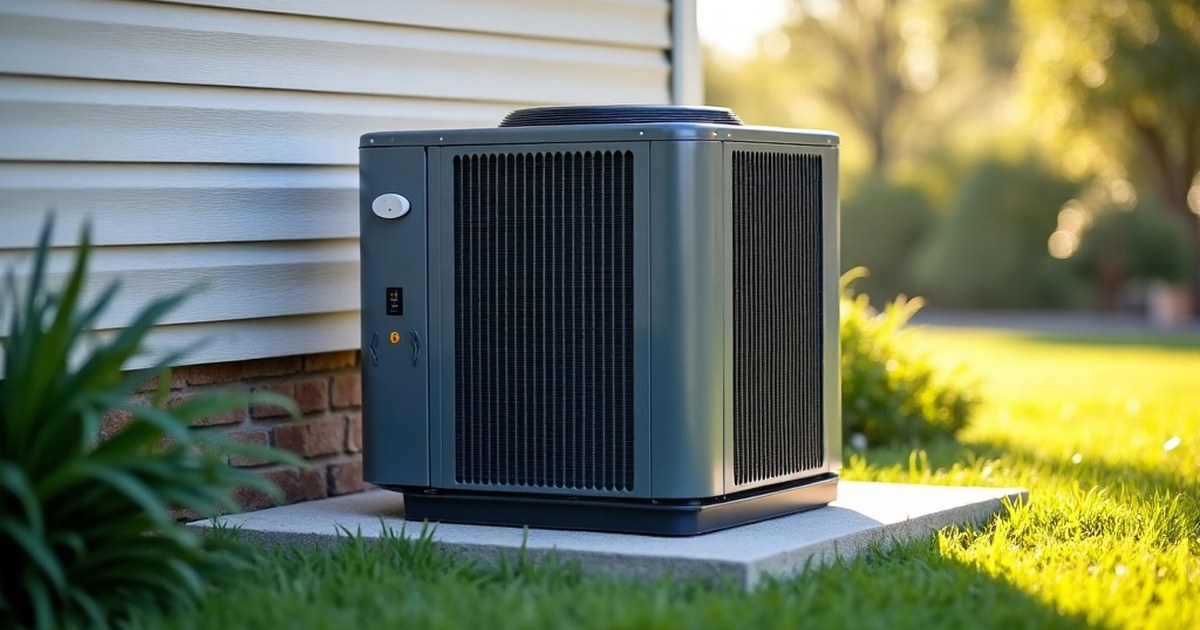
It is the hottest week of the year and the air coming out of your vents is barely cool. The
thermostat says 72 but the house sits at 80 and climbing. When your AC is not cooling, the
fear is a five-figure system replacement. Here is the part nobody selling you a new unit
will lead with: the most common fixes land between $150 and $700, against $3,000 to $9,500
for a whole new system.
The reason the range is so wide is that “not cooling” covers everything from a $175
capacitor to a dead $2,000 compressor. The difference between a cheap afternoon fix and a
major replacement usually comes down to one part and how old the unit is. Knowing which is
which before the technician arrives is how you avoid paying for the expensive guess.
What actually breaks when an AC stops cooling
Before you assume the worst, know that a large share of “not cooling” calls are not a
broken part at all. They are airflow and power problems that cost little or nothing to fix.
The real component failures fall into a short, predictable list, and they range from
trivial to serious.
- Dirty air filter or blocked airflow. A clogged filter is the single most common cause
HVAC techs find. It starves the system, drops cooling output, and can freeze the indoor
coil solid. A $15 filter and a thaw often fix it.
- Frozen evaporator coil. Ice on the indoor coil blocks airflow so nothing cools. It is
usually a symptom, not the root cause. The trigger is either restricted airflow (that
dirty filter) or low refrigerant from a leak.
- Failed capacitor. The small cylinder that gives the motors their starting jolt. When
it dies the outdoor fan or compressor hums but will not start. This is the most common
true part failure, and the cheapest.
- Burned contactor. The electrical relay that switches the outdoor unit on. Pitted or
stuck contacts stop the condenser from running at all.
- Condenser fan motor. The fan on top of the outdoor unit. If it will not spin, the
system overheats and shuts down on a safety trip.
- Refrigerant leak. A sealed system does not use up refrigerant, so low charge always
means a leak somewhere. More on why that matters below.
- Compressor. The heart of the outdoor unit and the most expensive single part. Real,
but far rarer than the panic suggests.
AC not cooling repair cost by part (2026)
These are installed prices, part plus labor, for a professional visit. Almost every call
carries a $75 to $200 diagnostic fee that good shops credit toward the repair if you go
ahead. Labor runs roughly $60 an hour in rural areas and up to $150 an hour in coastal
cities, so the same part costs more in Boston than in Kansas.
| Repair | Part cost | Installed total |
|—|—|—|
| Air filter / clear airflow | $15 to $40 | $15 to $150 |
| Thaw frozen coil + diagnose cause | Varies | $100 to $300 |
| Capacitor | $8 to $45 | $150 to $400 |
| Contactor | $20 to $100 | $200 to $450 |
| Condenser fan motor | $100 to $400 | $200 to $700 |
| Refrigerant leak repair + recharge | Varies | $225 to $1,600 |
| Evaporator coil | $500 to $1,600 | $1,000 to $2,800 |
| Compressor | $600 to $1,200 | $1,200 to $2,800 |
The two cheap fixes at the top clear a surprising number of no-cool calls. The capacitor,
contactor, and fan motor are the middle tier, all real repairs that keep a sound unit
running for a fraction of a replacement. The bottom three are the ones that push the math
toward a new system, and age is what decides it.
The hidden trap: a “low on refrigerant” quote is really a leak
Here is the misdiagnosis that costs homeowners the most, and it hides inside language that
sounds routine. A technician tells you the system is “low on refrigerant” and quotes a
recharge. You pay, the air gets cold, everyone is happy. Six weeks later it is warm again.
A central AC is a sealed loop. It does not burn or consume refrigerant the way a car burns
gas. If the charge is low, the refrigerant leaked out of a hole, and topping it off without
finding and sealing that hole is pouring money onto the ground. You will be back for another
recharge next season, and each one is more expensive than the last.
That last part is new for 2026. R-410A, the refrigerant in most systems installed over the
past 15 years, is being phased down under the EPA AIM Act, with production cut sharply
through the decade. Prices spiked hard, and installed R-410A now runs anywhere from $40 to
$150 per pound depending on your area, with a typical recharge needing several pounds. A big
leak on an old R-410A unit is no longer a simple top-off. You cannot switch that unit to the
cheaper new refrigerants either, because R-454B and R-32 systems use different pressures,
oils, and safety hardware. New refrigerant means new equipment.
So when you hear “just needs a recharge,” ask two questions. Where is the leak, and what
does it cost to seal it? A small accessible leak with a recharge might run $400 to $600. A
leak in the evaporator coil or a buried line on a 12-year-old system can top $1,600, and at
that point you are spending real money to refill a unit that is near the end anyway.
The cheaper trap runs the other direction. Before anyone quotes you a compressor, the most
expensive part in the machine, rule out the capacitor. A weak capacitor makes the compressor
hum and stall, which looks exactly like a dying compressor to a rushed eye. The capacitor is
a $150 to $400 fix. The compressor is ten times that. A technician with a meter settles it
in minutes, so insist the capacitor gets tested first.
Repair or replace: the decision framework
A central AC lasts 12 to 15 years, sometimes longer with steady maintenance. A new system
runs $3,000 to $7,500 for a standard install, with the national average landing around
$6,000 to $9,500 for a mid-efficiency 3-ton unit. Use the price of the system you would
actually buy as your denominator, not the premium variable-speed model the sales sheet pushes.
A useful shortcut the trade uses is the $5,000 rule: multiply the unit’s age by the repair
quote. If the number clears $5,000, lean toward replacement. A 14-year-old unit with a $400
repair scores 5,600 and tips toward replace. A 6-year-old unit with the same repair scores
2,400 and is an easy fix.
Repair if:
- The unit is under 10 to 12 years old and this is its first real failure
- The fault is a capacitor, contactor, fan motor, or thermostat, all $150 to $700 fixes
- The quote is under half the price of the new system you would realistically buy
- There is no refrigerant leak, or the leak is small, accessible, and cheap to seal
Replace if:
- The unit is over 12 to 15 years old and the failure is the compressor or evaporator coil
- The age-times-cost math clears $5,000
- You are facing a major refrigerant leak on an older R-410A system
- You are stacking repairs, a second or third major part in two or three seasons
- Efficiency has fallen off a cliff and summer power bills keep climbing
DIY if: the fix is airflow or power, which covers a real share of no-cool calls. Swap the
filter. Hose the leaves and grass clippings off the outdoor coil with the power off. Reset the
breaker once. If the indoor coil is a block of ice, turn the system to fan-only for a few
hours to thaw it, then replace the filter and see if it holds. What you do not DIY is the
capacitor, which stores a charge strong enough to injure you even with the power off, or
anything involving refrigerant, which by law requires an EPA-certified tech to buy and handle.
Those are pro jobs, full stop.
Bottom line
An AC not cooling is a cheap fix more often than a catastrophe. Start with the filter and the
breaker before you call anyone, because a meaningful number of these calls end there for the
price of a filter. If it is a real part, the capacitor, contactor, and fan motor keep a sound
unit alive for $150 to $700. Save the replacement decision for the cases that earn it: a
compressor or coil failure on a unit past 12 years, an age-times-cost score over $5,000, or a
serious refrigerant leak on aging R-410A equipment. Test before you buy, get the leak located
before you pay for a recharge, and make the capacitor prove innocent before anyone quotes you a
compressor.
FAQ
Why is my AC running but not cooling the house?
The most common reasons are a clogged air filter choking airflow, a frozen evaporator coil, or
low refrigerant from a leak. If the outdoor fan hums but will not spin, suspect a failed
capacitor. Start by checking the filter and the breaker, then call a tech if cool air does not
return within a few hours of a filter change and coil thaw.
Is it worth replacing an AC capacitor or should I replace the whole unit?
Replace the capacitor. At $150 to $400 installed it is one of the cheapest AC repairs and it
fixes the most common no-start failure. Only consider a new unit if the capacitor is one of
several failures on a system already past 12 years old.
How do I know if it is the capacitor or the compressor?
Both can cause a humming outdoor unit that will not start, which is why the capacitor gets
misdiagnosed as a dead compressor. A technician with a multimeter tests the capacitor in
minutes. Always have the capacitor checked first, because it is a $150 to $400 fix versus
$1,200 to $2,800 for a compressor.
Why does my AC keep needing refrigerant every summer?
Because it has a leak. A sealed system never consumes refrigerant, so a repeat recharge means
the refrigerant is escaping and no one sealed the hole. With R-410A prices climbing in 2026,
annual top-offs on an old unit add up fast. Get the leak found and priced, then decide whether
sealing it or replacing the unit makes more sense.
Related reading
- Is It Worth Repairing a 3 to 5 Year Old Appliance?
- Refrigerator Ice Maker Replacement Cost vs New Fridge
- Dishwasher Not Heating or Drying? Repair vs Replace vs DIY
- Washing Machine Loud Banging During Spin Cycle
- Dryer Door Latch Replacement Cost vs New Dryer
Cost ranges cross-checked against HomeGuide’s 2026 AC repair cost data
Leave a Reply