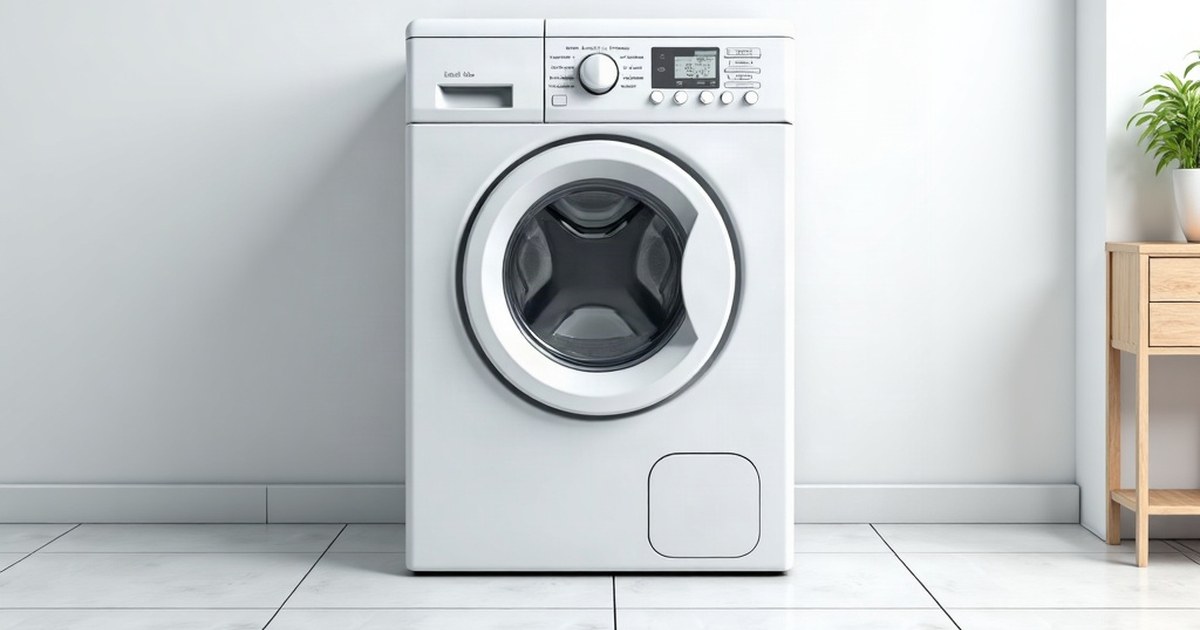
You started a load, came back an hour later, and the drum is sitting full of water, or the clothes are soaked and the tub never spun them out. Before you call a repair tech or start shopping for a new machine, you need to know one thing: a washer that won’t spin or drain is one of the most misdiagnosed appliance problems there is, and the cause ranges from a free ten-minute fix to a job that says buy a new one. Guess wrong and you either overpay a tech for something you could have cleared yourself, or you replace a good machine over a $15 part.
Spinning and draining are two jobs the washer does back to back, so when one fails the other usually looks broken too. The machine will not spin a tub full of water, so a drain problem shows up as a spin problem. The trick is figuring out which link in the chain actually failed. Here is how to tell what you are dealing with and what each fix costs in 2026.
Start here: is it a drain problem or a spin problem?
These are different failures with very different price tags, and separating them is the whole game.
- Full of water, no spin. The tub is standing full and the cycle stalled. This is almost always a drain fault: a clogged filter, a blocked hose, or a failed pump. The washer will not spin until the water is gone, so the no-spin is a symptom, not the cause.
- Drained but won’t spin. The water is gone but the clothes come out sopping and the drum never got up to speed. This points to the spin side: a failed lid switch or door lock, a worn drive belt, a broken motor coupler, or the motor itself.
- Neither, and the panel shows an error. A control board or main electronic fault can kill both functions at once. Less common, and the most expensive, so rule out everything cheaper first.
Ninety percent of the time, a washer that will not spin or drain is standing full of water, which means you are looking at the drain side first. And the drain side is where the cheapest fixes live.
Washer repair cost by cause (2026)
These are installed prices, part plus labor, for a professional appliance tech. Most charge a $70 to $130 service or diagnostic fee, and labor runs $50 to $125 an hour depending on region. The same repair costs more in Boston than in Omaha.
| Cause | Part cost | Installed total |
|—|—|—|
| Clogged pump filter / coin trap | $0 | $0 DIY, or $100 to $200 if a pro clears it |
| Kinked or clogged drain hose | $0 to $30 | $100 to $200 |
| Drain pump | $20 to $100 | $150 to $400 |
| Lid switch (top-load) | $20 to $130 | $85 to $300 |
| Door lock assembly (front-load) | $30 to $100 | $80 to $200 |
| Drive belt | $10 to $40 | $100 to $200 |
| Motor coupler (direct-drive top-load) | $15 to $30 | $85 to $200 |
| Drive motor | $80 to $300 | $250 to $700 |
| Main control board | $80 to $250 | $200 to $500 |
| Replace the washer | Varies | $500 to $1,500 |
Everything above the motor is a repair that keeps a sound machine running for well under the cost of replacing it. The motor and control board are where the math starts to tip, and machine age is what decides it.
The hidden trap: the fix is often free
Here is the misdiagnosis that costs people the most. A washer sits full of water, the owner assumes the pump is dead, and a tech gets called for a $250 job. But the single most common reason a washer will not drain is a clogged pump filter, also called the coin trap, and clearing it fixes the problem about 40 percent of the time. It is free, and it takes ten minutes.
Front-load washers hide a small access panel at the bottom front of the machine. Behind it is a round filter that catches coins, hairpins, lint, and the occasional sock before they reach the pump. Over months of use it clogs, water backs up, and the machine stops draining. Put a shallow pan and a towel under the panel, twist the filter cap counterclockwise, pull out the gunk, and rinse it. Top-load machines usually route to the pump through a drain hose instead, so on those you check the hose behind the machine for a kink or pull it and flush it out.
Before you pay anyone, do three things: clean the pump filter, straighten and flush the drain hose, and run a rinse-and-spin. If the water leaves, you just saved yourself a service call. Only when the drum is clean, the hose is clear, and it still will not drain are you actually looking at a failed pump.
The second trap runs the other way. A washer that drains fine but will not spin is very often a $15 to $30 lid switch or door lock, not a dead motor. The washer is built so it cannot spin unless it knows the lid or door is shut, so when that switch fails the drum simply refuses to turn. People hear a machine that will not spin and picture a burned-out motor and a $600 repair, when the real fault is a cheap plastic switch and an hour of labor. Any tech worth calling checks the lid switch or door lock before quoting you a motor.
Repair or replace: the decision framework
A washing machine lasts about 10 to 14 years, with top-loaders often reaching the high end and front-loaders averaging closer to 10 or 11. A new machine runs $500 to $1,500, with most solid mid-range washers landing around $650 to $1,100 installed. The trade rule is the same one that governs every appliance on this site: replace when the repair quote clears half the cost of a new machine, or when a major part fails on a machine already past its expected life.
Repair if:
- The machine is under 8 years old and this is its first real failure
- The fault is a drain pump, belt, lid switch, door lock, or motor coupler, all of which run well under half the price of a new washer
- The repair quote lands under $300 on a machine that has otherwise been reliable
- Clearing the filter or hose fixes it, in which case there is nothing to buy at all
Replace if:
- The drive motor or main control board failed and the machine is past 8 years old, since $250 to $700 into an aging washer rarely pays off
- The repair quote clears half the cost of a comparable new machine
- You are stacking repairs, a pump last year and a motor this year, on a machine near or past a decade old
- The tub bearings are going, which is a labor-heavy teardown that often costs more than the machine is worth
- A front-loader older than 10 years needs anything beyond a simple part
DIY if: the job is a clog or a clearly accessible part and you can unplug the machine first. Clean the pump filter, straighten and flush the drain hose, and check for a coin lodged in the pump. A drive belt or a lid switch is within reach for a confident DIYer with a manual and the model number. What you leave to a pro is anything involving the motor, the control board, or a tub teardown. Those need the machine tipped or opened, and the labor is where the money goes.
Bottom line
A washer that will not spin or drain looks like a dead machine and usually is not. Sort it first: a tub full of water is a drain problem, an empty tub that will not spin is a spin problem. Start with the free fixes, because a clogged filter or a kinked hose is the cause almost half the time and costs nothing to clear. If it truly is a failed part, a pump, belt, lid switch, or coupler runs $85 to $400 installed and is worth doing on a machine under 8 years old. Save the replacement for a motor or control board failure on a washer already past a decade, and you will not spend $700 on a machine you should have let go, or $250 on a fix a towel and ten minutes could have handled.
FAQ
Why is my washer full of water and won’t drain?
The most common cause is a clogged pump filter or coin trap, followed by a kinked or blocked drain hose, and then a failed drain pump. Clean the filter and check the hose first, since those two fixes are free and solve the problem close to half the time. Only if the drum is clean and clear and still will not drain are you looking at a pump replacement, which runs $150 to $400 installed.
Why does my washer drain but not spin?
When the water leaves but the drum never spins up, the usual culprit is a failed lid switch on a top-loader or a door lock on a front-loader, because the machine will not spin unless it senses the lid or door is closed. That part is cheap, $20 to $130, and $85 to $300 installed. A worn drive belt or a broken motor coupler can also stop the spin, both of which are inexpensive parts.
Is it worth repairing a washer that won’t spin or drain?
Yes, if the machine is under 8 years old and the fix is a pump, belt, switch, or coupler, since those all cost well under half the price of a new washer. It stops being worth it when the motor or control board fails on a machine past a decade old, or when the repair quote clears half the cost of a replacement.
Can I fix a washer that won’t drain myself?
Often, yes. Cleaning the pump filter and checking the drain hose are ten-minute jobs that need no tools beyond a towel and a pan, and they resolve most no-drain cases. Unplug the machine first. Leave the motor, control board, and any tub teardown to a professional.
Related reading
- Washing Machine Loud Banging During Spin Cycle: Repair, Replace, or DIY Fix?
- Is It Worth Repairing a 3 to 5 Year Old Appliance?
- Dryer Door Latch Replacement Cost vs New Dryer
- Refrigerator Ice Maker Replacement Cost vs New Fridge
- Dishwasher Not Heating or Drying? Repair vs Replace vs DIY
Cost ranges cross-checked against HomeGuide’s 2026 washing machine repair cost data.
Leave a Reply